
Tatarstan
A republic of Russia with a rich Volga Bulgar heritage.

Unknown author · CC BY 4.0
Tatarstan, officially the Republic of Tatarstan and sometimes called Tataria, is a republic of Russia located in Eastern Europe, part of the Volga Federal District. Its capital and largest city is Kazan, an important cultural centre in Russia. The region's main source of wealth is oil, with a strong petrochemical industry. Tatarstan has strong cultural, linguistic and ethnic ties with its eastern neighbour, Bashkortostan.
- capital
- Kazan
- official_languages
- Tatar and Russian
- head
- Rustam Minnihanov
- major_natural_resource
- Oil, natural gas, gypsum
Lore & Background
This is celebrated yearly in the city of Bolgar. Other historical predecessors include the Golden Horde and the Khanate of Kazan, before the region was conquered by Russia.
Reader's Guide
Tatarstan's significance lies in its historical role as a centre of Volga Bulgar civilisation and Islamic culture in Eastern Europe, and its modern status as a major oil-producing republic within Russia. The republic's journey from the Tatar ASSR to a federal subject with a brief period of declared sovereignty in the 1990s illustrates the complex relationship between regional identity and central Russian authority. Its cultural and linguistic ties with Bashkortostan and its position along the Volga and Kama rivers have shaped its economic and demographic character. Tatarstan's oil deposits, estimated at over one billion tons, underpin its economy.
Did You Know?
- The republic has over one billion tons of oil deposits.
- The name 'Tatarstan' derives from the ethnic group Tatars and the Persian suffix -stan.
A Layered Past — From Volga Bulgaria to Modern Statehood
The territory now known as Tatarstan carries one of the deepest historical layers in Eastern Europe. Its earliest organised political entity, Volga Bulgaria, flourished between the seventh and thirteenth centuries as a mercantile power whose trade networks stretched from the Baltic to the Middle East and across Inner Eurasia. Despite sustained pressure from the Khazars, Kievan Rus', and the Cuman-Kipchaks, the state held its independence until Mongol forces under Batu Khan overran it in the late 1230s. The surviving population gradually merged with Kipchak groups of the Golden Horde, giving rise to the Volga Tatars. In the 1430s the region reasserted sovereignty as the Khanate of Kazan, centred on a capital 170 kilometres upriver from the old Bulgar ruins. Tsar Ivan the Terrible's conquest in the 1550s brought forced Christianisation, the demolition of every mosque by 1593, and a construction ban on Islamic worship that endured until Catherine the Great permitted the first new mosque in the 1760s. The twentieth century saw a brief nationalist bid for an Idel-Ural State during the Civil War, followed by the creation of the Tatar ASSR on 27 May 1920 and, finally, the renaming to the Republic of Tatarstan in 1992.
Rivers, Forests, and a Shifting Landscape
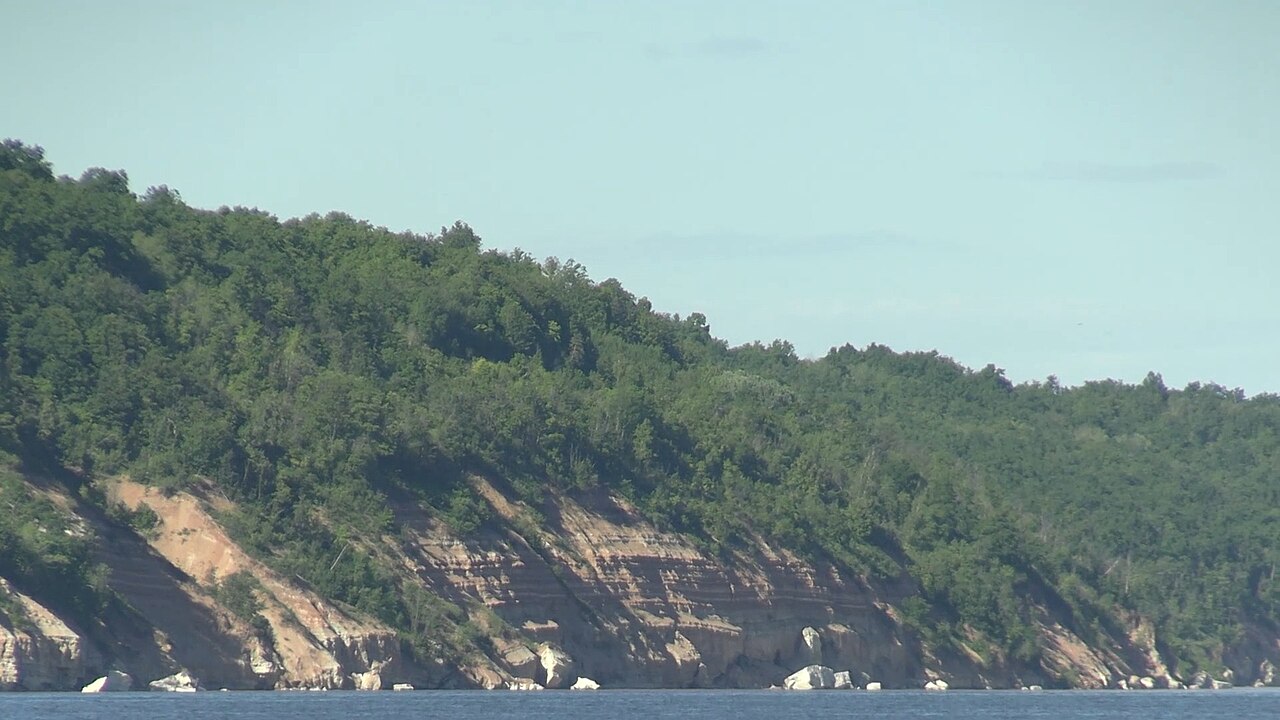
Tatarstan sits in the heart of the East European Plain, some 800 kilometres east of Moscow, wedged between the Volga and its major tributary the Kama, with its eastern edge reaching toward the Ural Mountains. The republic spans 68,000 square kilometres — about 0.4 percent of Russia's total land area — stretching up to 460 kilometres east to west and 290 north to south, with its highest point at 381 metres. Water defines the landscape. Eight major rivers — the Volga, Kama, Vyatka, Belaya, Ik, Kazanka, Zay, and Azevka — thread through the territory, while three large reservoirs (Kuybyshev, Lower Kama, and Zainsk) hold back wide stretches of water. The largest natural lake is Kaban; the biggest wetland is the Kulyagash swamp. The Volga-Kama Nature Reserve protects a portion of this riverine country. Forests once covered more than half the republic, but three centuries of clearing have reduced woodland to roughly 17 percent of the area. Where trees remain, oak dominates, present on 87 percent of the total area, followed by aspen, linden, birch, and Scots pine. The climate is continental: January averages around −15 °C, July hovers near +18 °C, and annual precipitation falls in the 500-to-550-millimetre range.
Language, Faith, and the Name of a People
The very name "Tatarstan" is a small linguistic fingerprint: it pairs the ethnic label "Tatar" with the Persian suffix -stan, meaning "state" or "country of," a construction familiar across Eurasia. During Soviet rule the official Russian rendering was Tatariya, and the republic's own Tatar-language name, Tatarstan respublikası, coexists with an Arabic-derived variant, Tatarstan Cömhüriyäte. In Turkish the name appears as Tataristan, and in some Tatar texts as Tatarıstan — small spellings that trace the word's journey through multiple language families. Two languages hold official status: Tatar and Russian. The religious landscape is equally dual, with the mufti Kamil Samigullin heading the Islamic community and the metropolitan bishop Cyril Nakonechny leading the Orthodox one. Islam's arrival in the region dates to 922, when missionaries from Baghdad brought the faith to the Volga Bulgars; the anniversary is still marked each year in the city of Bolgar. In the nineteenth century, Tatarstan became a cradle of Jadidism, a reformist Islamic current that preached tolerance toward other faiths and fostered notably cordial relations between the Tatar community and other peoples of the Russian Empire.
Oil, Administration, and the Shape of Modern Tatarstan
Tatarstan's economic engine is hydrocarbons. The republic sits on an estimated one billion tons of oil deposits, supplemented by natural gas and gypsum reserves, and has built a strong petrochemical industry around those resources. This wealth underpins a population of just over four million (4,004,809 at the 2021 census) spread across 43 municipal districts, two urban districts — Kazan and Naberezhnye Chelny — 39 urban settlements, and 872 rural communities. Kazan, the capital and largest city, serves as a significant cultural centre within Russia. The republic is governed by head Rustam Minnihanov and falls within the Volga Federal District. Its borders touch four oblasts (Kirov, Ulyanovsk, Samara, Orenburg) and four other republics (Mari El, Udmurtia, Chuvashia, and Bashkortostan). The eastern neighbour Bashkortostan shares particularly strong cultural, linguistic, and ethnic ties with Tatarstan, a bond that reflects their common Tatar heritage.
Gallery
Frequently Asked Questions
What is Tatarstan?
Tatarstan is a Russian republic located in Eastern Europe as part of the Volga Federal District. It carries its own distinct cultural and linguistic identity and is sometimes informally called Tataria.
What is Tatarstan's capital and largest city?
Kazan serves as both the seat of government and the most populous city in the republic. It is widely regarded as one of Russia's principal cultural centres.
What drives Tatarstan's economy?
The region's wealth is heavily anchored in oil extraction and a robust petrochemical sector. This energy base has made Tatarstan one of Russia's more economically significant republics.
What are Tatarstan's official languages?
Both Tatar and Russian hold official status within the republic. This bilingual framework reflects the region's deep-rooted Volga Bulgar heritage alongside its integration into the Russian Federation.
More in States And Regions 1-15
Spotted an error? Know more?
This is a living reference — every entry is fact-audited, and reader corrections feed straight into our audit queue. Suggest an edit · See this site's audit record