
Punjab
Historical region of five rivers, breadbasket of India and Pakistan.

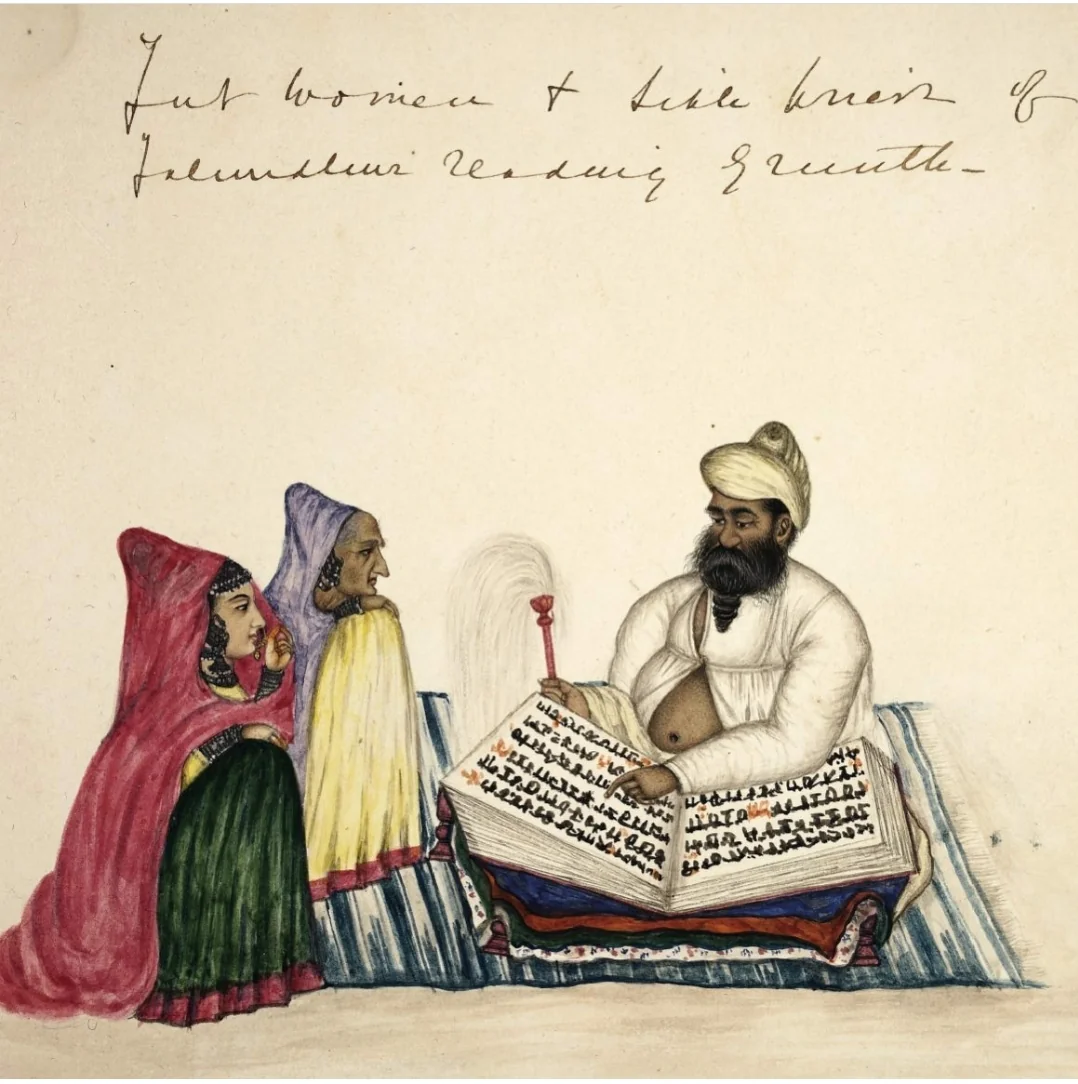
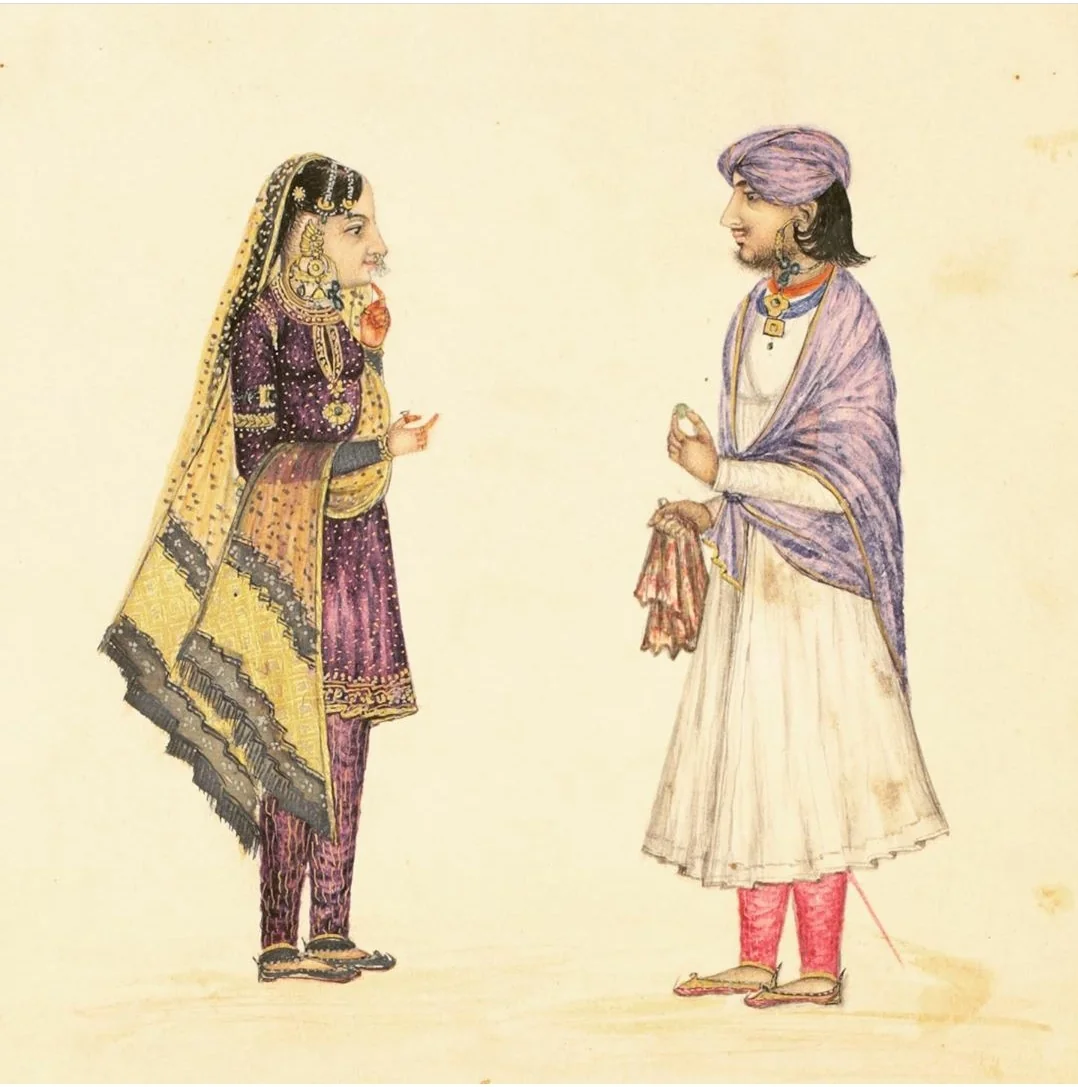
Sani Draftman of Jalandhar · Public domain
Punjab is a geographical, ethnolinguistic, and historical region in South Asia, located in its northwestern part, comprising areas of modern-day Pakistan and northwestern India. Its name means 'Land of Five Waters,' referring to the rivers Jhelum, Chenab, Ravi, Sutlej, and Beas. Lahore is its largest city and historic capital. Agriculture has been the chief economic feature, and Punjab emerged as an important agricultural region, especially following the Green Revolution during the mid-1960s to the mid-1970s, described as the 'breadbasket of both India and Pakistan.'
Lore & Background
Frequent intertribal wars stimulated the growth of larger groupings ruled by chieftains and kings, who ruled local kingdoms known as Mahajanapadas. The epic battles described in the Mahabharata are chronicled as being fought in what is now the state of Haryana and historic Punjab. In the 4th century BCE Punjab was invaded by Alexander the Great. B. Bosworth warns against an uncritical reading of Greek sources that were exaggerated. Alexander later founded two cities—Nicaea at the site of victory and Bucephalous at the battle-ground. The Mauryan military was made up vastly of men from the Punjab Janapadas. From the 7th to 9th centuries, the Turk Shahi dynasty originating from Gandhara ruled western Punjab along with Kabulistan, before being replaced by the Hindu Shahi in the 9th century.
Reader's Guide
Punjab's significance lies in its role as a cradle of ancient civilization and a continuous agricultural heartland. The region's name, meaning 'Land of Five Waters,' reflects its defining geography of five rivers, all tributaries of the Indus. Agriculture has been the chief economic feature, and the Green Revolution during the mid-1960s to the mid-1970s cemented Punjab's status as the 'breadbasket of both India and Pakistan.'
Historically, Punjab was a crossroads of invasions and empires, from Alexander the Great to the Mauryan Empire and the Hindu Shahi dynasty. The boundaries of the region are imprecisely defined and have changed over time. The predominant ethnolinguistic group are the Punjabi people, with Punjabi Muslims as the majority in Pakistani Punjab and Punjabi Sikhs as the majority in Indian Punjab. The region's cultural and religious diversity, including Hindus, Christians, Jains, Zoroastrians, Buddhists, and Ravidassias, reflects its layered history.
Did You Know?
- The name 'Punjab' is a Persian calque of Indo-Aryan 'pañca-áp', meaning 'Land of Five Waters', referring to the rivers Jhelum, Chenab, Ravi, Sutlej, and Beas.
- The ancient Greeks referred to the region as Pentapotamía, meaning 'land of five rivers'.
- The 14th-century author Ayn al-Mulk Mahru mentioned the wilayat (state) of Punjab while describing the Mongol invasion of the region.
Geography, Identity & Demographics
Punjab sits in northwestern India, bordered by Himachal Pradesh to the north and northeast, Haryana to the south and southeast, Rajasthan to the southwest, and Jammu and Kashmir to the north. To the west, it shares an international border with the identically named Pakistani province. Chandigarh serves as a shared capital for both Punjab and Haryana. The state spans 50,362 square kilometres, making it the 19th-largest Indian state by area. With over 27 million people spread across 23 districts, it ranks 16th by population. The name Punjab derives from Punj (five) and Aab (water), meaning land of five rivers, referencing the Sutlej, Beas, Ravi, Chenab, and Jhelum. However, after the 1947 partition, only the Sutlej, Beas, and Ravi flow through the Indian state. Punjabi, written in the Gurmukhi script, is the official and most widely spoken language. The dominant ethnic group is Punjabi, with Sikhs at 57.7% and Hindus at 38.5% forming the principal religious communities.
Ancient Civilisations & Classical Encounters
The Punjab region is home to one of the earliest urban societies, the Indus Valley Civilisation, which flourished from around 3000 BCE before declining roughly a millennium later following Indo-Aryan migrations between 1500 and 500 BCE. The bulk of the Rigveda was composed in this region between approximately 1500 and 1200 BCE, with Vedic religion centred primarily on the worship of Indra. Frequent intertribal warfare gave rise to larger kingdoms known as Mahajanapadas, and the great epic battles of the Mahabharata are chronicled as taking place in what is now Haryana and historic Punjab, with numerous tribes including the Kambojas, Gandharas, and Yaudheyas contributing to the region's composite culture. The area served as a frontier for Alexander's and the Maurya empires during antiquity. King Porus, whose kingdom stretched between the Jhelum and Chenab rivers and contained nearly 300 cities, famously refused to submit to Alexander, leading to the Battle of the Hydaspes. Subsequent rulers included the Kushan, Gupta, and Harsha empires, while nomadic Huna, Turkic, and Mongol peoples continued to settle the region.
Sikh Empire, Partition & State Reorganisation
Sikhism emerged between the 15th and 17th centuries based on the teachings of the Sikh Gurus. Conflicts between the Mughals and later Sikh Gurus drove the militarisation of the Sikh community, and after the Mughal Empire weakened, a Sikh confederacy formed that competed with the larger Durrani Empire for regional control. In 1801, Maharaja Ranjit Singh united this confederacy into the Sikh Empire. The British East India Company annexed the larger Punjab region from the Sikh Empire in 1849. At Indian independence in 1947, the Punjab province was partitioned along religious lines amid widespread violence: the Muslim-majority western portion joined Pakistan while the Hindu- and Sikh-majority east remained in India, triggering massive migration. Following the Punjabi Suba movement, Indian Punjab was reorganised on linguistic lines in 1966, with Haryanvi- and Hindi-speaking areas carved out as Haryana, Pahari-speaking regions attached to Himachal Pradesh, and the remaining Punjabi-speaking areas forming the current state. A separatist insurgency later occurred during the 1980s.
Modern Economy, Development & Cultural Life
Since independence, Punjab has remained predominantly an agrarian society. Its economy ranks 15th among Indian states, with a gross domestic product of ₹8.02 trillion (approximately US$83 billion) and a per capita GDP of ₹264,000 (around US$2,700), placing it 17th nationally. The state holds the ninth-highest ranking among Indian states on the human development index. Beyond agriculture, Punjab sustains vibrant tourism, music, culinary, and film industries that enrich its cultural identity. The Punjabi people, writing their language in the Gurmukhi script, maintain a heritage rooted in centuries of migration, settlement, and the blending of diverse cultures and ideas. The region's history as a civilisational melting pot—shaped by Indus Valley urbanism, Vedic composition, the Mahabharata's epic narratives, successive empires, and the rise of Sikhism—continues to inform the identity of its over 27 million inhabitants spread across 23 districts.
Gallery
Frequently Asked Questions
What is Punjab?
Punjab is a northwestern South Asian region straddling parts of modern-day India and Pakistan, historically defined by the meeting of five major rivers. Its name literally means 'Land of Five Waters,' referring to the Jhelum, Chenab, Ravi, Sutlej, and Beas.
What is Punjab's primary economic role?
Agriculture has long been the backbone of the region, earning it the nickname 'breadbasket' for both India and Pakistan. The fertile, river-fed plains produce enormous quantities of grain and crops that feed large portions of both nations.
What is Punjab's largest city?
Lahore, situated in the Pakistani portion, is the region's largest city and has functioned as its historic capital for centuries. It remains a major cultural and political hub for Punjabi-speaking communities on both sides of the border.
More in States And Regions 1-15
Spotted an error? Know more?
This is a living reference — every entry is fact-audited, and reader corrections feed straight into our audit queue. Suggest an edit · See this site's audit record