
Punjab, Pakistan
Most populous Pakistani province, second-largest by area.

User:Abbasi786786 · CC BY-SA 4.0
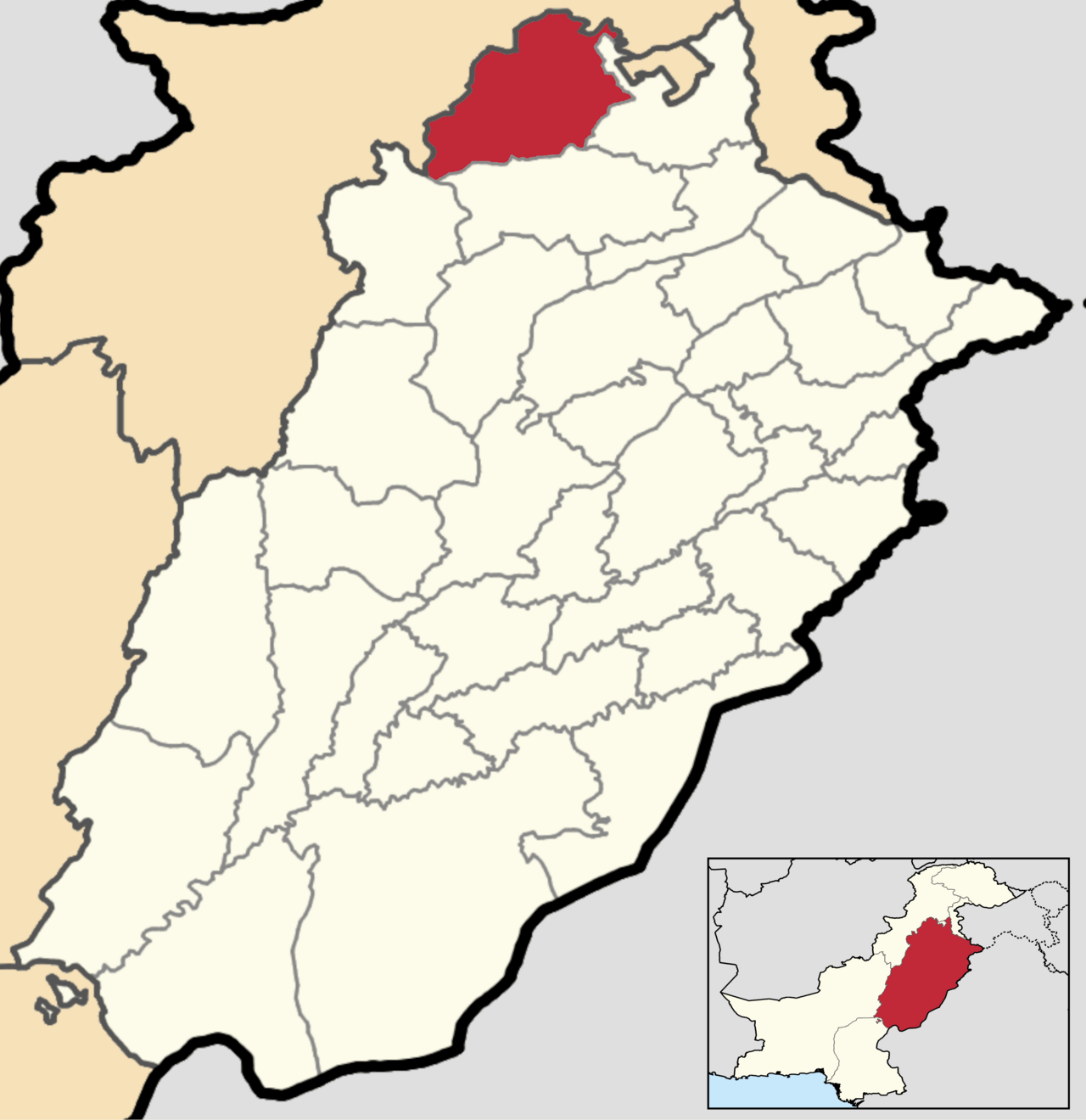
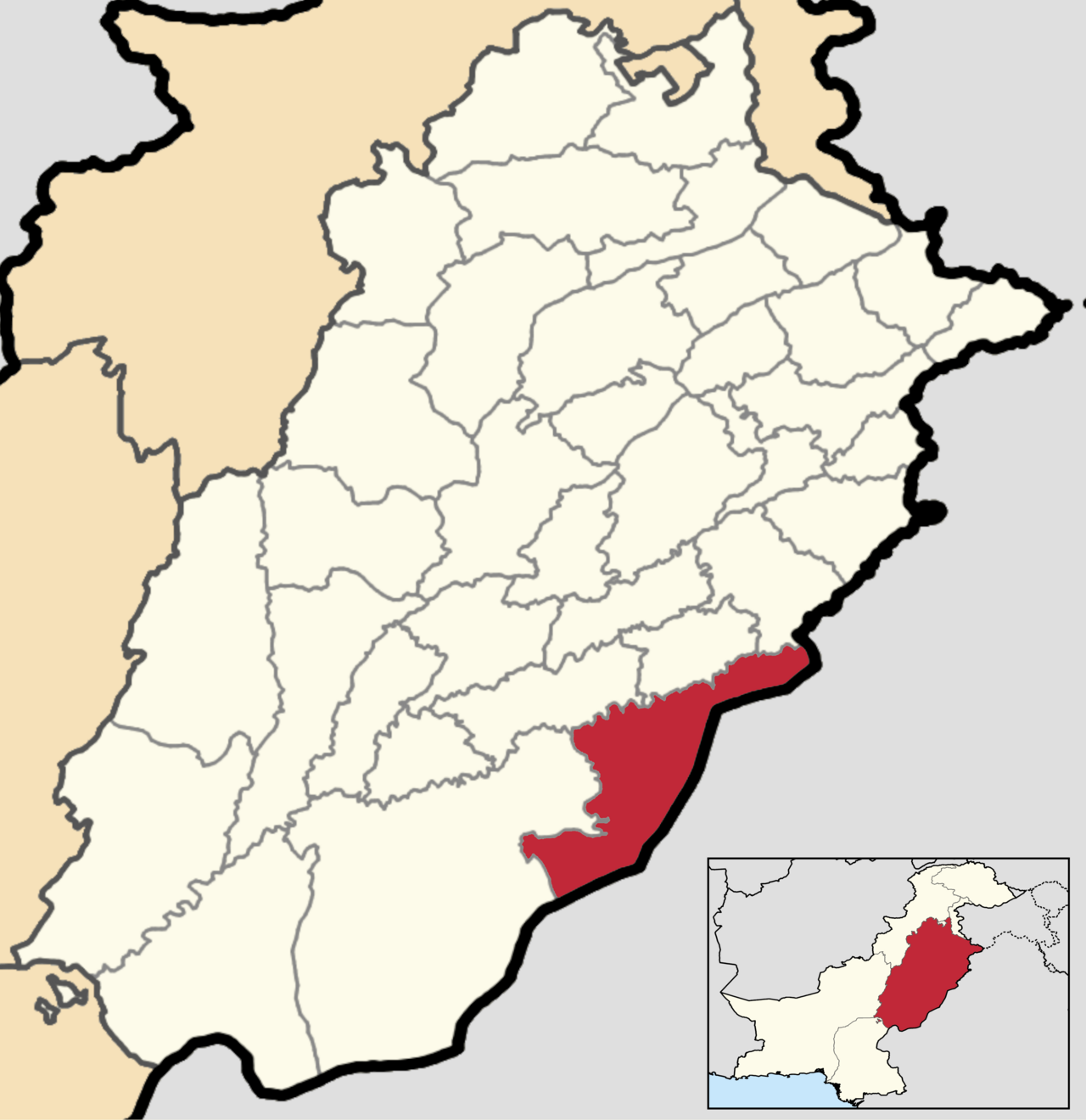
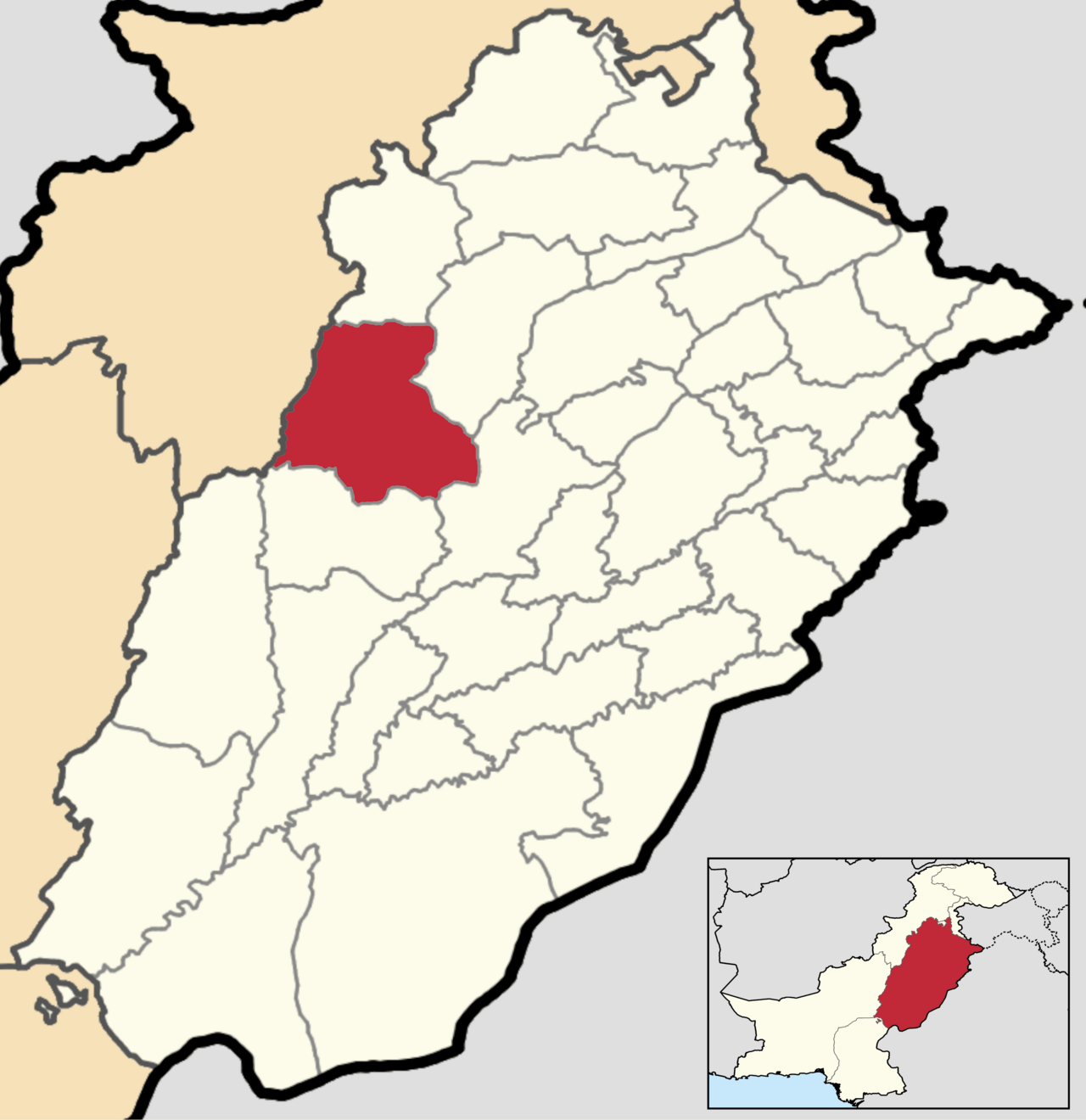
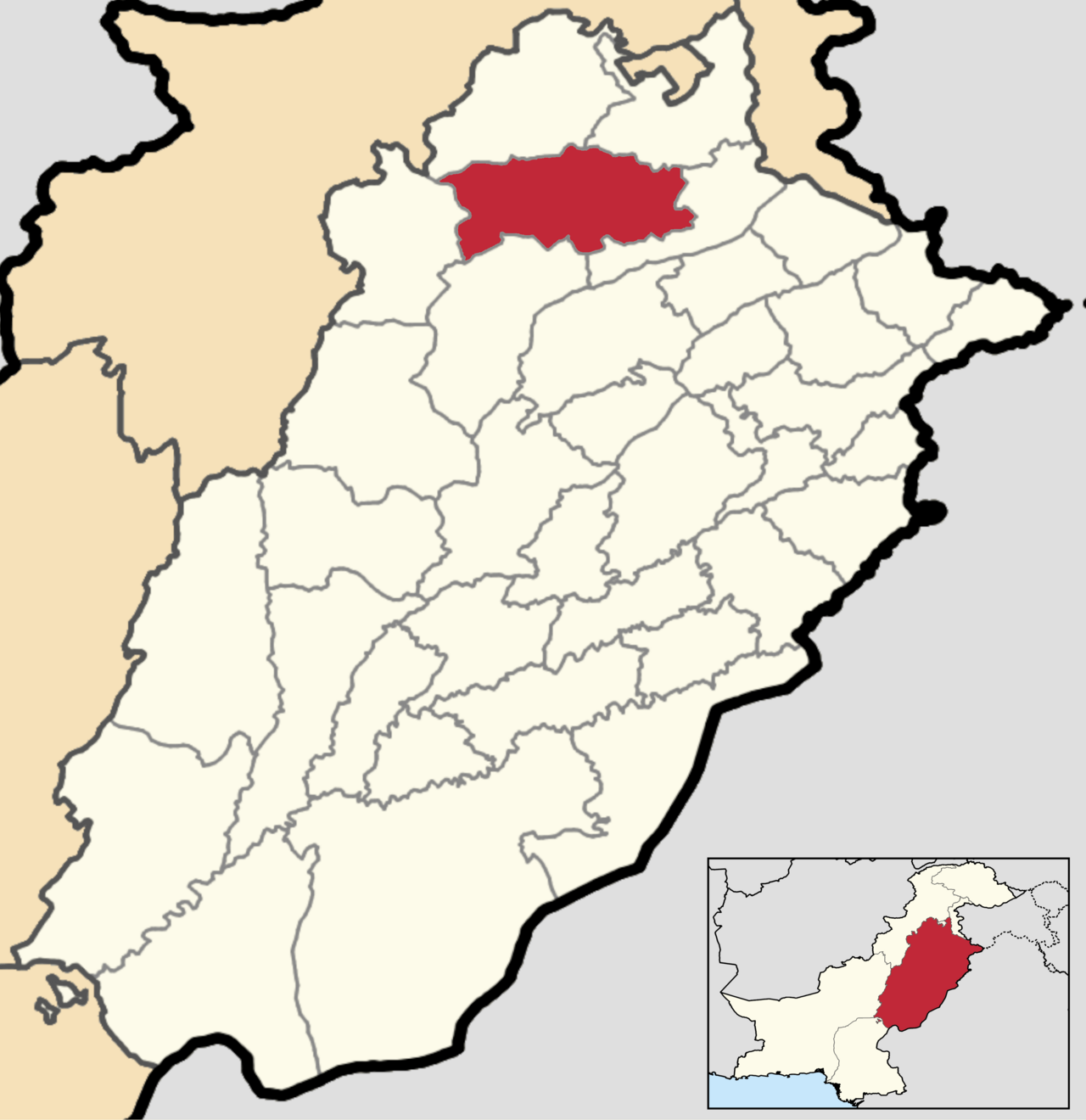
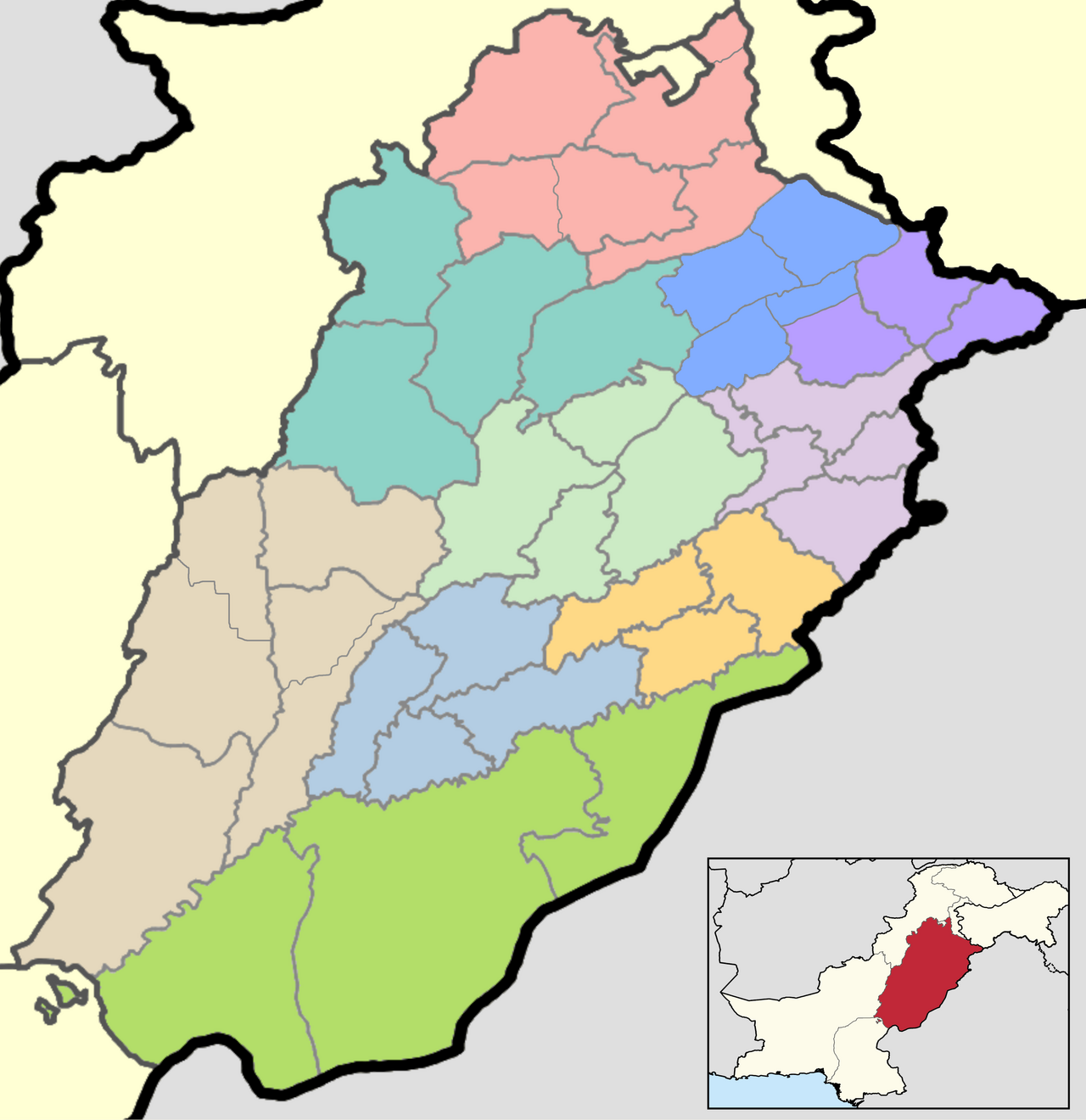
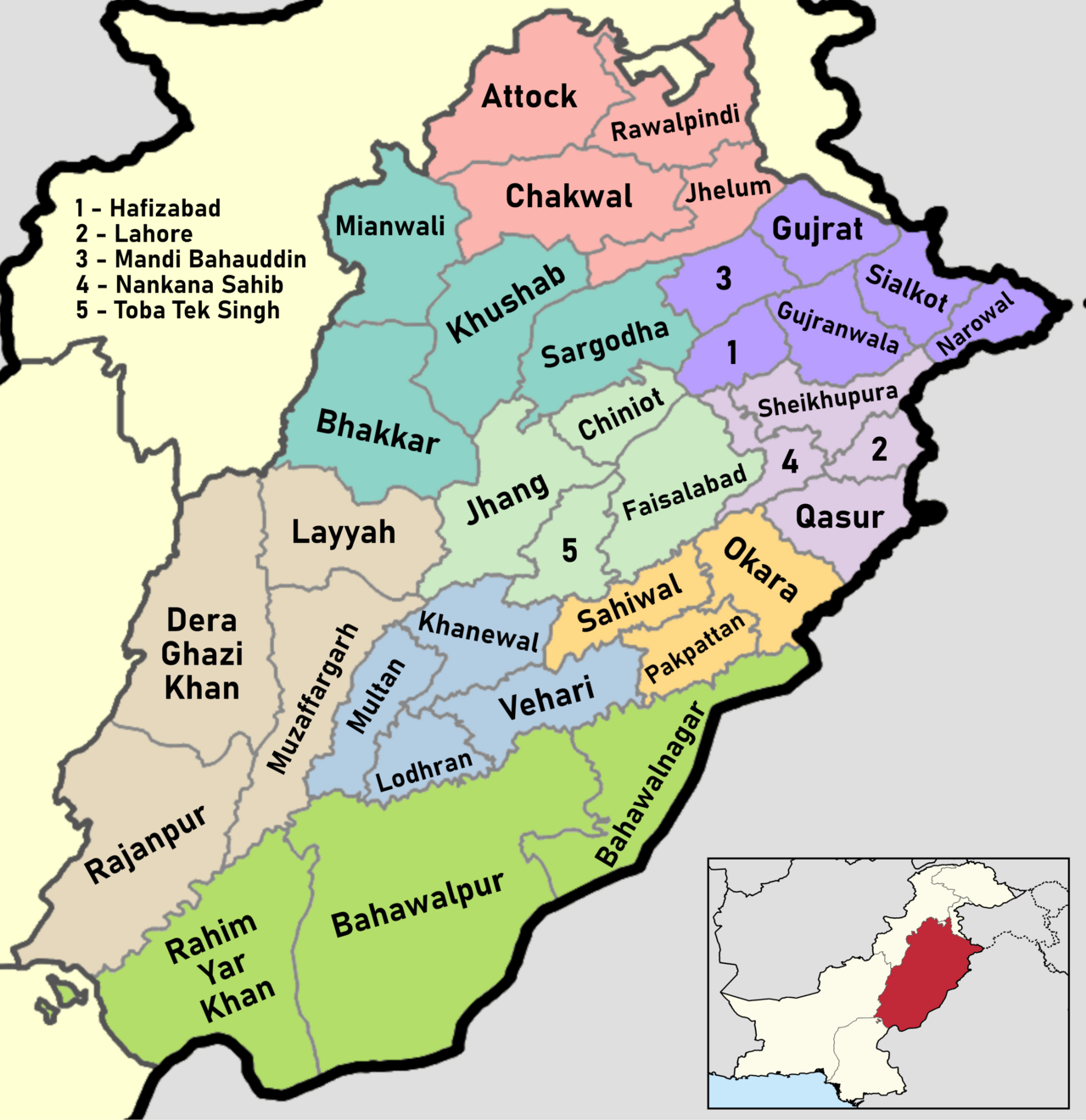
Punjab is the most populous province of Pakistan and the second-largest province by area. It is divided into 41 districts and 10 divisions (as of January 2023). The province forms the bulk of the transnational Punjab region, partitioned in 1947 between Pakistan and India. Its capital and largest city is Lahore.
- capital
- Lahore
- major_cities
- Faisalabad, Rawalpindi, Gujranwala, Multan
- region
- South Asia
- borders
- Khyber Pakhtunkhwa, Balochistan, Sindh, Islamabad Capital Territory, Azad Kashmi
- urban_population_percentage
- approximately 40%
Verified Timeline
Lore & Background
Districts and Divisions were both introduced in Punjab as administrative units by the British when Punjab became a part of British India. At the time of Punjab's second census in 1868, the Punjab was divided into 32 districts under 10 divisions. By the 1901 census, the 10 revenue divisions had been reorganized into only 5 larger divisions: Delhi, Jalandhar, Lahore, Multan, and Rawalpindi, and Sirsah District had been absorbed into Hissar District. On 25 October 1901, after the 1901 census was taken, the Punjab province was divided into two separate entities: Punjab and the North-West Frontier Province. The North-West Frontier Province consisted of the three districts of Hazara, Kohat, and Peshawar, the Bannu and Marwat Tehsils of Bannu District, and the Dera Ismail Khan, Kulachi, and Tank Tehsils of Dera Ismail Khan District. In 1904, Attock District was created out of parts of Rawalpindi District and Jhelum District, and Lyallpur District was created out of parts of Gujranwala, Jhang, and Montgomery Districts. In 1909, Mianwali District transferred from Multan Division to Rawalpindi Division. At the time of Punjab's 1911 Census, Punjab had 29 districts split among 5 divisions. In late 1911, the imperial capital of British India was moved from Calcutta to Delhi; the district was reorganized as its own province that year, decreasing the number of districts in Punjab to 28. After the creation of Delhi Province, Delhi Division went by the name 'Ambala Division'. In 1919, Sheikhupura District was created from parts of Gujranwala and Lahore Districts and placed in Lahore Division. This exact setup existed through the 1931 census, 1941 census, and all the way up to the partition of India and the independence of India and Pakistan.
Reader's Guide
At the time of the Partition of India, Punjab was split religiously. As of the 1941 census, Punjab had a population that was 53.22% Muslim, 29.11% Hindu, and 14.91% Sikh. Punjab was split into East Punjab (placed in India) and West Punjab (placed in Pakistan). The line dividing the two was placed by Cyrial Radcliffe, known as the Radcliffe line. In the partition, Multan Division and Rawalpindi Division, which were 75.43% and 85.52% Muslim respectively, were entirely given to Pakistan. Ambala Division was given to India, being only 28.07% Muslim. Jalandhar Division was entirely given to India. In Lahore Division, Gujranwala (70.45% Muslim), Sheikhupura (63.62% Muslim), and Sialkot (62.18% Muslim) Districts were all entirely given to Pakistan. Amritsar District (46.52% Muslim) was entirely given to India. Lahore District and Gurdaspur Districts, both Muslim majority (60.62% Muslim and 51.14% Muslim respectively) were the only two districts in Punjab that were split. In the end, fifteen districts of Punjab went entirely to Pakistan, all of which were Muslim majority; twelve districts of Punjab went entirely to India, all of which were non-Muslim-majority, and the two districts of Gurdaspur and Lahore, both Muslim majority, were split between India and Pakistan. This left sixteen districts in Pakistani Punjab, split into three divisions. In 1955, the One Unit policy consolidated all of West Pakistan into one province; from 1955–1970, the province of West Punjab ceased to exist. The One Unit policy ended in 1970 and provinces returned; when West Punjab was reorganized, it was renamed Punjab and the area which earlier housed the Princely State of Bahawalpur was absorbed into the province. By the time of the 1972 Census of Pakistan, Punjab was divided into five divisions covering nineteen districts.
Did You Know?
- Punjab is the most populous province of Pakistan and the second-largest province by area, divided into 41 districts and 10 divisions as of January 2023.
- At the time of the 1868 census, Punjab was divided into 32 districts under 10 divisions.
- On 25 October 1901, the Punjab province was split into Punjab and the North-West Frontier Province, with the latter taking three districts and parts of two others.
- In the 1947 partition, fifteen Muslim-majority districts went entirely to Pakistan, while twelve non-Muslim-majority districts went entirely to India.
- The One Unit policy from 1955–1970 abolished the province of West Punjab; when it returned in 1970, it was renamed Punjab and absorbed the former Princely State of Bahawalpur.
The Punjab Naming Duality
One of the most recognizable examples of subnational name-sharing in the world is the case of Punjab, which designates both a state within India and a province within Pakistan. These two political units occupy the same name yet belong to entirely different sovereign nations and carry different administrative labels: the Indian entity is formally a state, while the Pakistani counterpart is designated a province. This dual usage means that a reader encountering the word 'Punjab' must rely on additional context—whether the reference is to India or to Pakistan—to determine which of the two subnational entities is meant. The disambiguation framework treats this as a straightforward homonymy between two subnational bodies rather than a single territory split across borders, placing it squarely in the category of subnational entities that bear the same or similar names. The pairing stands out for its cultural prominence, yet structurally it follows the same pattern as lesser-known pairs such as Limburg in Belgium and the Netherlands, or Jura in Switzerland and France, where a single name maps onto two distinct administrative units in two different countries.
Classification Among Subnational Homonyms
Within the broader catalogue of subnational entities that share names across borders, Punjab (province of Pakistan) occupies a position alongside a diverse roster of geographic and political pairings. The list includes Baden, which appears as both a historical German territory and a Swiss district; Galicia, spanning an autonomous community in Spain, a historical Polish province, and a historical Ukrainian province; Karelia, present as both a Russian federation subject and a former Finnish province; and Lapland, found in both Sweden and Finland. Other entries range from Montana in the United States to Montana as the capital of a Bulgarian province, from Munster in Ireland to Münster in Germany, and from New South Wales in Australia to a historical Canadian area. Kurdistan appears in both Iraq and Iran, while Paraná names a Brazilian state and an Argentine city. Punjab's inclusion in this group underscores that name-sharing among subnational units is a widespread phenomenon, cutting across continents, eras, and levels of administrative autonomy, and that the Punjab pairing is one instance among many where a single toponym serves two or more distinct political entities simultaneously.
Subnational Versus National Naming Patterns
The disambiguation structure deliberately separates name collisions into two tiers: national entities and subnational entities. Other national-level pairings include Georgia the country versus Georgia the U.S. state, and Bosnia and Herzegovina the country versus its internal Federation. Punjab, by contrast, belongs to the subnational tier, where both the Indian state and the Pakistani province are components of larger sovereign nations rather than the nations themselves. This distinction matters because it changes the political weight of the naming collision: a shared national name implies two independent states in proximity or historical continuity, whereas a shared subnational name, as with Punjab, implies two administrative units that happen to carry an identical label within their respective countries.
Ancient Regions and the Broader Naming Landscape
Beyond modern political units, the homonym landscape extends into antiquity and into categories that blur the line between region and state. Galatia, for instance, appears in both Asia and Europe as an ancient region, while Palestine is listed as both a region and a state, illustrating how a single name can straddle different political statuses across centuries. Additionally, the page references placenames such as Albania and Dardaria, and notes the historical shift in French usage from 'Belgique' to 'Pays-Bas' for the Netherlands after Belgian independence, showing how political events can reshape which name is associated with which territory. Punjab's place in this wider taxonomy reminds us that shared names are not merely a modern bureaucratic quirk but a feature of geographic and political history stretching back millennia.
Gallery
Frequently Asked Questions
Who is Punjab, Pakistan?
Punjab, Pakistan is the most populous province in Pakistan, home to over 127 million people, making it the second most populous subnational entity on Earth. Its capital and largest city is Lahore, and it occupies the central-eastern portion of the country.
What are Punjab, Pakistan's powers and role?
Punjab functions as Pakistan's agricultural breadbasket and most industrialised province, contributing the largest share of national GDP. It drives the country's economy through major industrial and manufacturing hubs in cities like Faisalabad, Gujranwala, and Multan.
How does Punjab, Pakistan's story end?
As a living province rather than a narrative with a fixed conclusion, Punjab continues to evolve as Pakistan's demographic and economic core. Its ongoing pressures—rapid urbanisation, water scarcity, and shifting regional politics—keep shaping its trajectory forward.
Why is Punjab, Pakistan important?
Punjab is indispensable because it produces the bulk of Pakistan's food supply and industrial output while housing the overwhelming majority of the nation's population. Losing its contribution would strip Pakistan of its economic backbone and a central pillar of its cultural identity.
Who are Punjab, Pakistan's key neighbours and connections?
Punjab borders Khyber Pakhtunkhwa, Balochistan, Sindh, Islamabad Capital Territory, Azad Kashmir, and across the international line, India's Rajasthan and Punjab states plus Indian-administered Kashmir. It constitutes the Pakistani half of the larger transnational Punjab region that was divided during the 1947 partition.
More in States And Regions 1-15
Spotted an error? Know more?
This is a living reference — every entry is fact-audited, and reader corrections feed straight into our audit queue. Suggest an edit · See this site's audit record